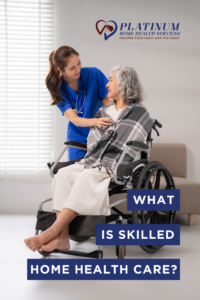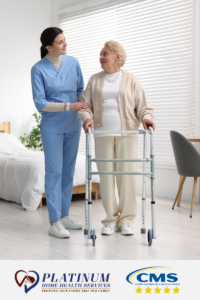
We often get asked, who qualifies for home health care? When most people hear home health care, they picture someone who is very ill, bedridden, or unable to care for themselves. But home health care can benefit a much wider range of people.
Someone recovering from surgery may need physical therapy for a few weeks. An older adult struggling with bathing or meal preparation may need extra support. A person managing a new diagnosis may benefit from skilled nursing visits.
Home health care isn’t only about caring for someone who is very sick. It’s about bringing the right care and support into the home to help people recover, remain independent, and live as safely as possible.
Who Qualifies for Home Health Care?
There isn’t one single type of home health patient. Depending on their needs and eligibility, home-based services may benefit someone who:
- Is recovering after surgery or a hospital stay
- Has experienced a fall or is at increased risk of falling
- Has difficulty walking, transferring, or navigating stairs
- Is recovering from a joint replacement, fracture, or other medical event
- Has a wound requiring skilled care
- Needs help managing medications or a new diagnosis
- Is experiencing weakness or decreased endurance
- Has difficulty with dressing, bathing, or other everyday activities
- Is managing a chronic condition
- Needs additional assistance to remain safely at home
The type of care someone needs will determine whether skilled home health care, non-skilled home care, or a combination of support may be appropriate.
Skilled Home Health: Healthcare Brought to You
Skilled home health provides clinical services in the patient’s home under the direction of healthcare professionals.
Skilled Nursing
A registered nurse or licensed practical nurse may assist with:
- Medication education and management
- Wound care
- Monitoring vital signs and symptoms
- Chronic disease education
- Post-surgical monitoring
- Physician-ordered treatments
- Patient and caregiver education
Skilled nursing can be especially valuable after hospitalization or when someone is learning to safely manage a new or changing health condition.
Physical Therapy
Physical therapy doesn’t always have to happen in an outpatient clinic.
Home-based physical therapy can help improve strength, balance, walking, mobility, endurance, transfers, and fall prevention while supporting recovery following surgery, injury, or hospitalization.
An added benefit is that therapy happens in the patient’s actual environment. A therapist can work on the stairs they use every day, practice getting safely in and out of their favorite chair, or identify potential fall hazards around the home.
Occupational Therapy
Occupational therapy helps people safely and independently perform everyday activities.
An occupational therapist may work on bathing and shower safety, dressing and grooming, meal preparation, upper-body strength, adaptive equipment, energy conservation, and home safety.
Sometimes relatively small changes can make a significant difference in someone’s ability to remain independent.
Home Health Aide Services
When appropriate as part of a skilled home health plan of care, home health aides can assist with certain personal care needs while a patient receives skilled services.
This additional support can be valuable while someone is recovering or working toward greater independence.
What If Someone Doesn’t Need Medical Care?
This is where non-skilled home care can make a tremendous difference.
A person doesn’t necessarily need nursing or therapy to benefit from help at home. Sometimes the challenge isn’t a medical procedure; it’s everyday life.
Non-skilled home care may assist with:
- Bathing and personal hygiene
- Dressing and grooming
- Meal preparation
- Light housekeeping
- Mobility assistance
- Companionship
- Errands
- Routine daily activities
For someone who wants to remain at home but is beginning to struggle with certain activities, a little extra support can help preserve safety and independence while providing peace of mind for family members.
You Don’t Have to Wait for a Crisis
Families often begin searching for home health care after a hospitalization, fall, surgery, or sudden decline.
But those aren’t the only times to start asking questions.
Maybe Mom has started holding onto furniture when she walks. Dad isn’t managing his medications as well as he used to. Your spouse is home from surgery and recovery requires more help than expected. Or everyday tasks have simply become more difficult over time.
Those changes are worth paying attention to.
Instead of asking, “Is this person sick enough for home health care?” consider asking:
“What would help this person be safer, healthier, and more independent at home?”
Receiving help doesn’t necessarily mean losing independence. In many cases, the goal is exactly the opposite: providing the right support to help someone maintain it.
Could Home Health Care Be Right for You?
Understanding who qualifies for home health care can be confusing, and eligibility for specific skilled services depends on medical needs, physician orders, insurance coverage, and other requirements.
You don’t need to figure it all out on your own.
At Platinum Home Health Services, our skilled home health team works with patients, families, physicians, and referral partners to help individuals receive appropriate care in the comfort of home.
When the need is less clinical but additional day-to-day support could make life safer or easier, Platinum Home Helper provides non-skilled services designed to support independence and quality of life.